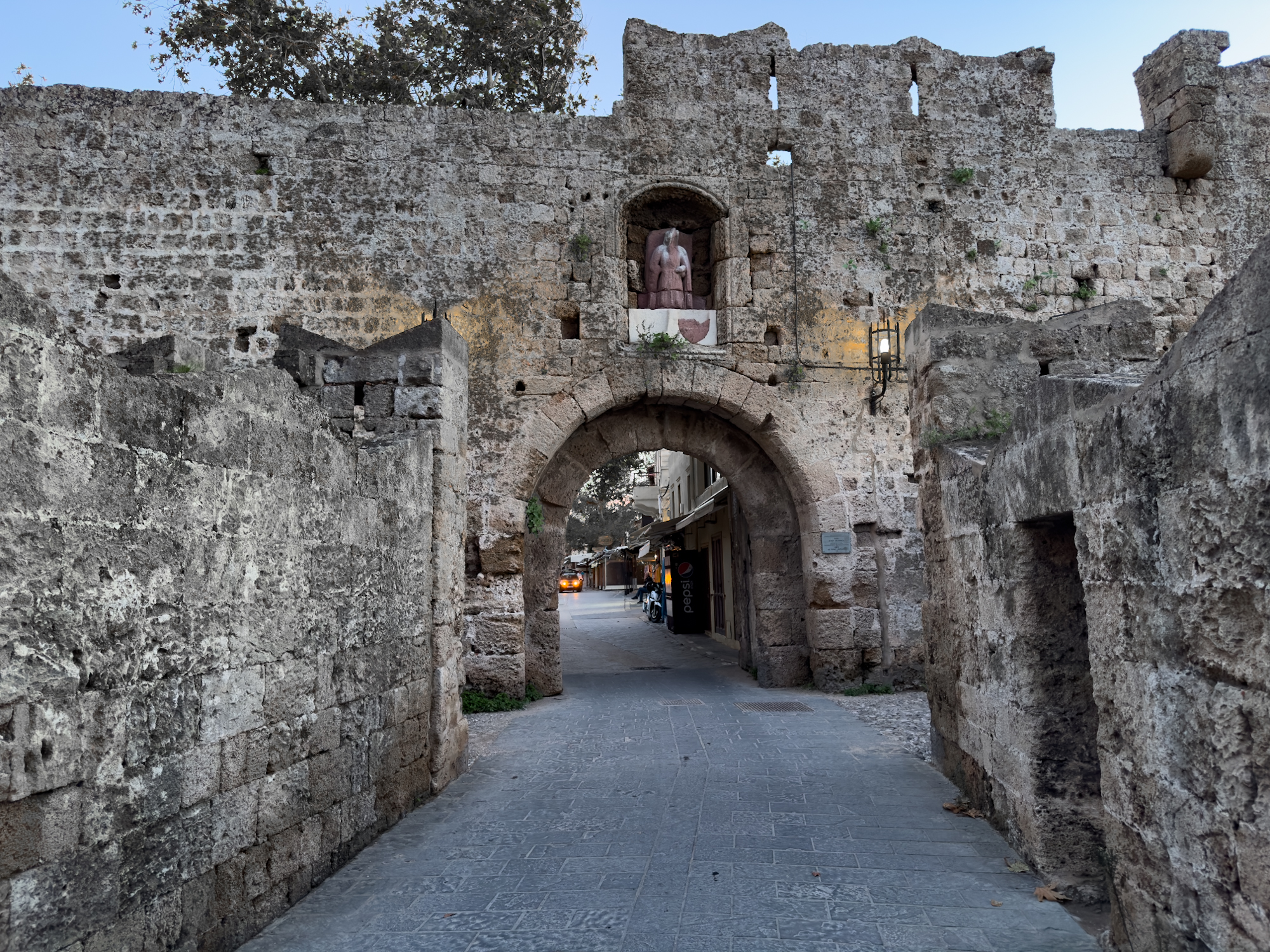
Constructed around 1441, this gate is linked to the Ottoman conquest. Legend says that Suleiman the Magnificent entered Rhodes through here in 1522. The Sultan subsequently ordered the gate to be sealed to prevent any future conqueror from following his path. It remained closed until 1922, when it was reopened by the Italians.
Constructed around 1441, this gate is linked to the Ottoman conquest. Legend says that Suleiman the Magnificent entered Rhodes through here in 1522. The Sultan subsequently ordered the gate to be sealed to prevent any future conqueror from following his path. It remained closed until 1922, when it was reopened by the Italians.
Constructed around 1441, this gate is linked to the Ottoman conquest. Legend says that Suleiman the Magnificent entered Rhodes through here in 1522. The Sultan subsequently ordered the gate to be sealed to prevent any future conqueror from following his path. It remained closed until 1922, when it was reopened by the Italians.
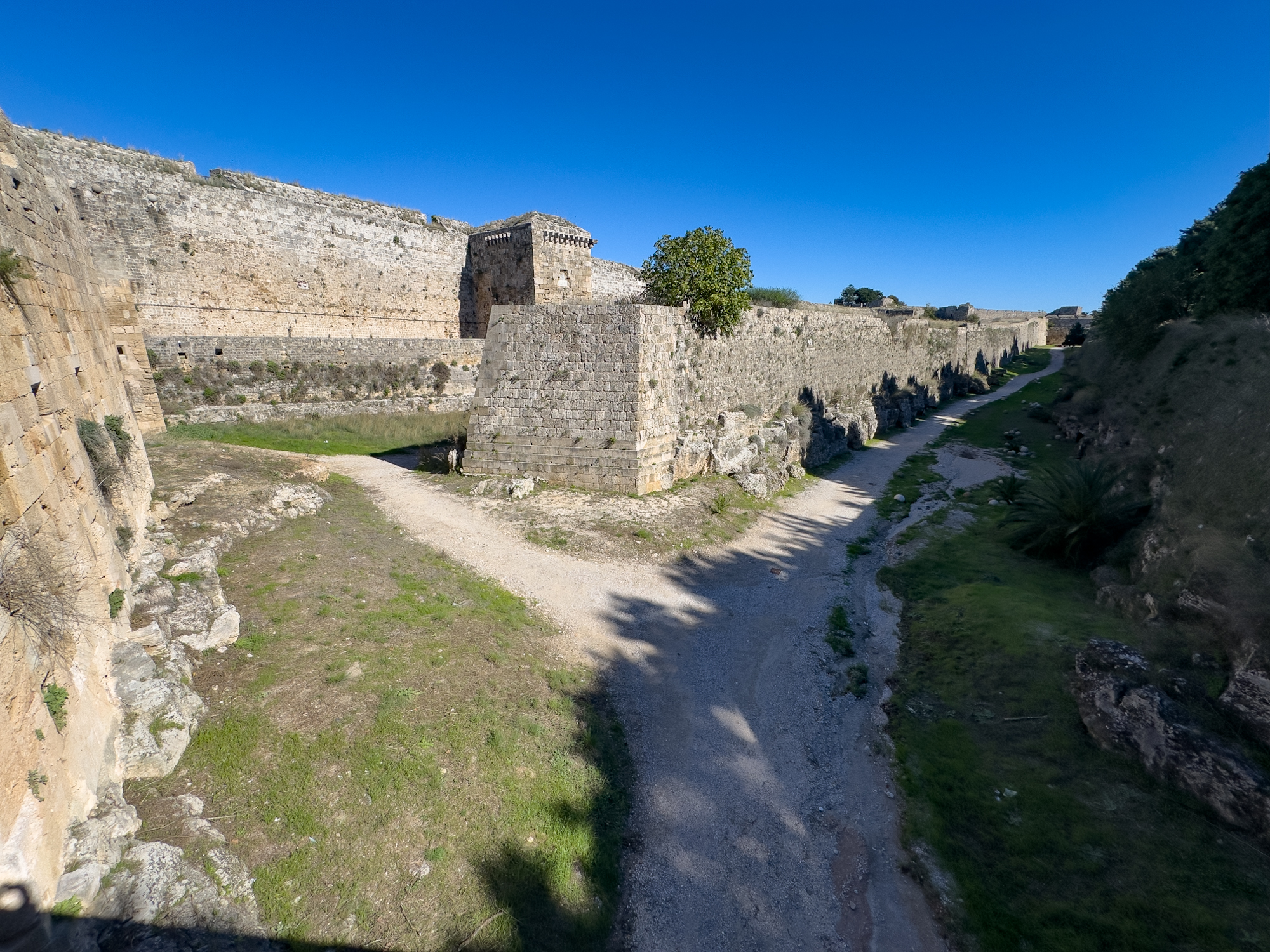
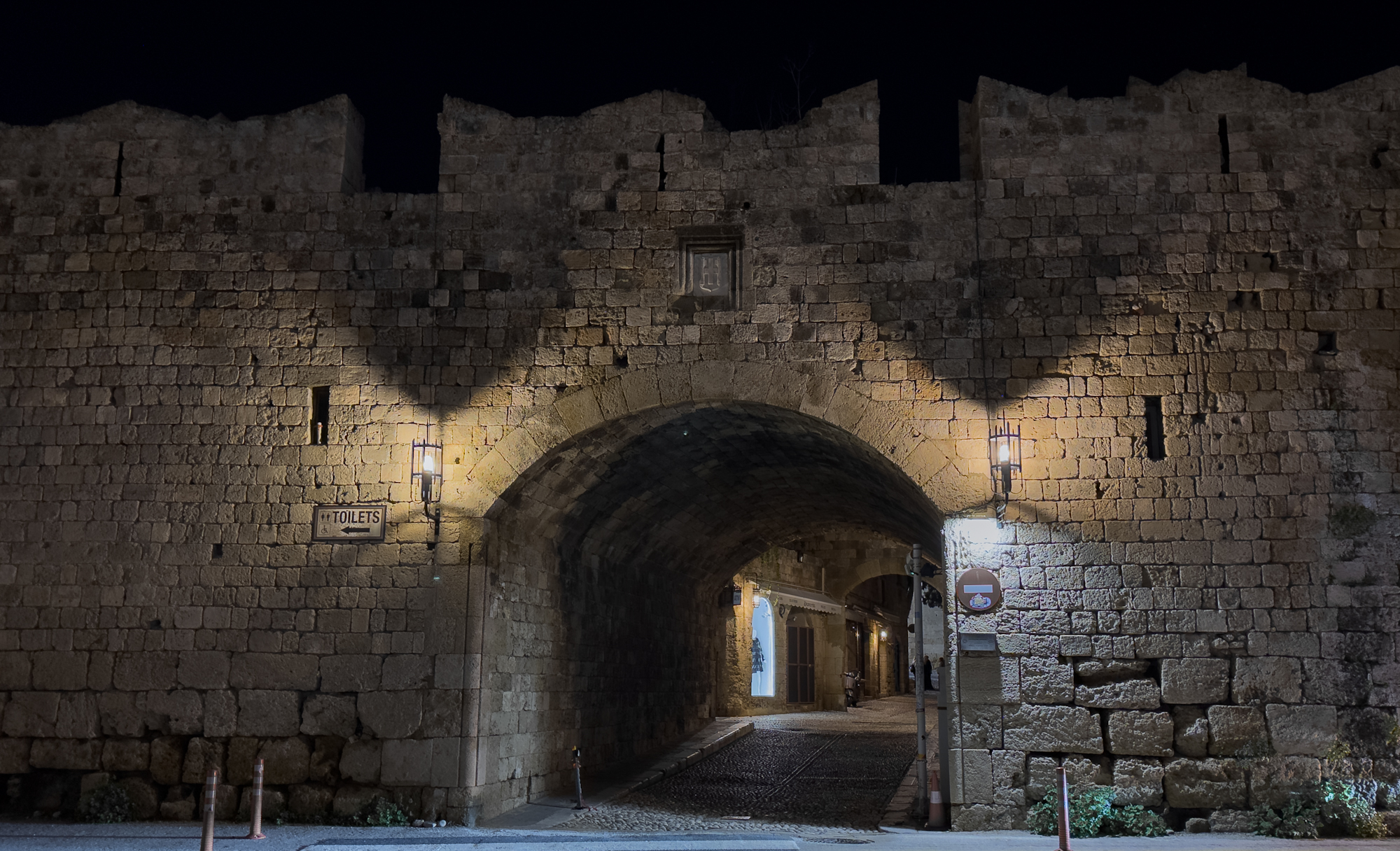
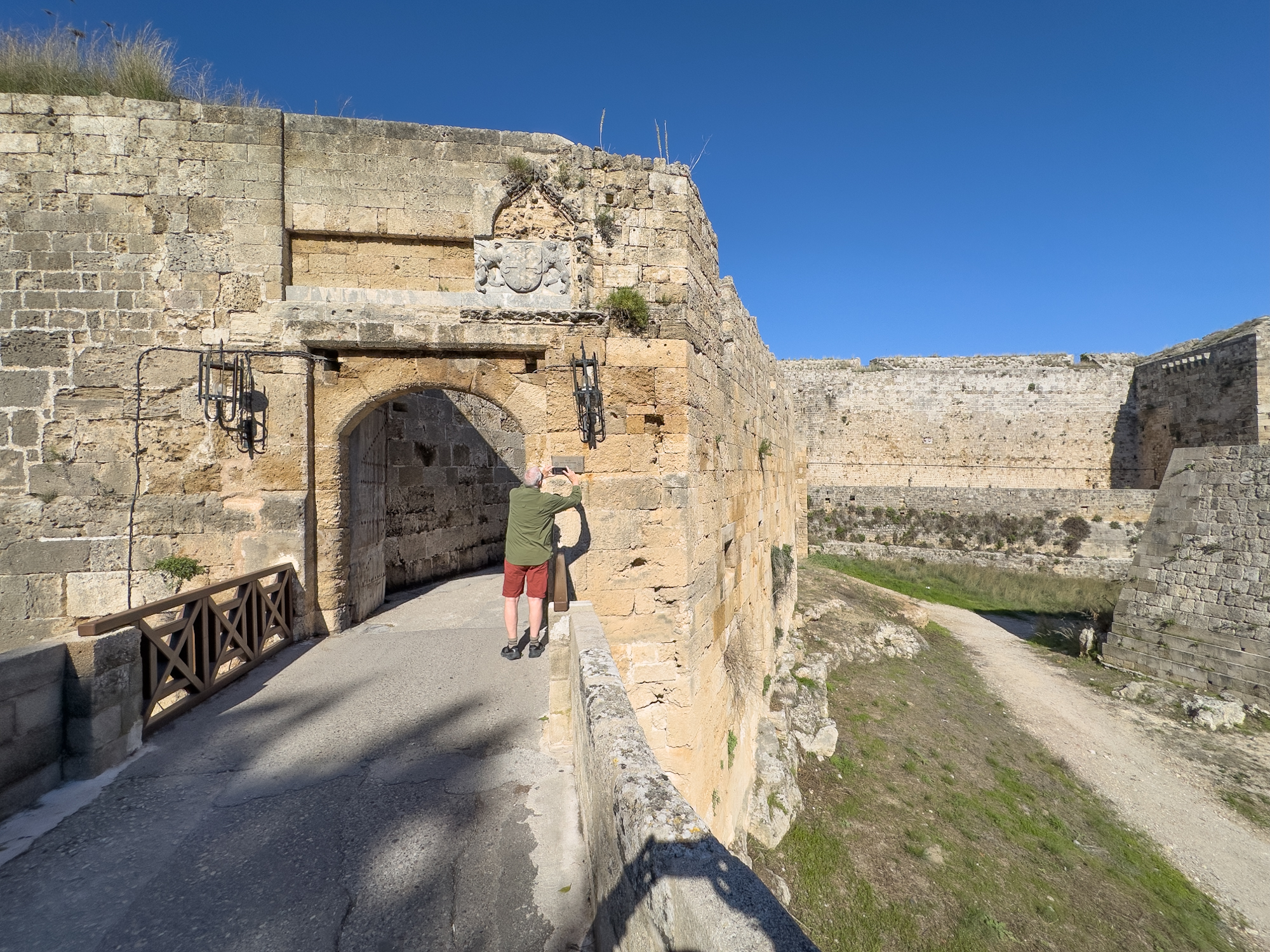
A smaller, functional gate providing access to the New Hospital of the Knights.
A smaller, functional gate providing access to the New Hospital of the Knights.
A smaller, functional gate providing access to the New Hospital of the Knights.
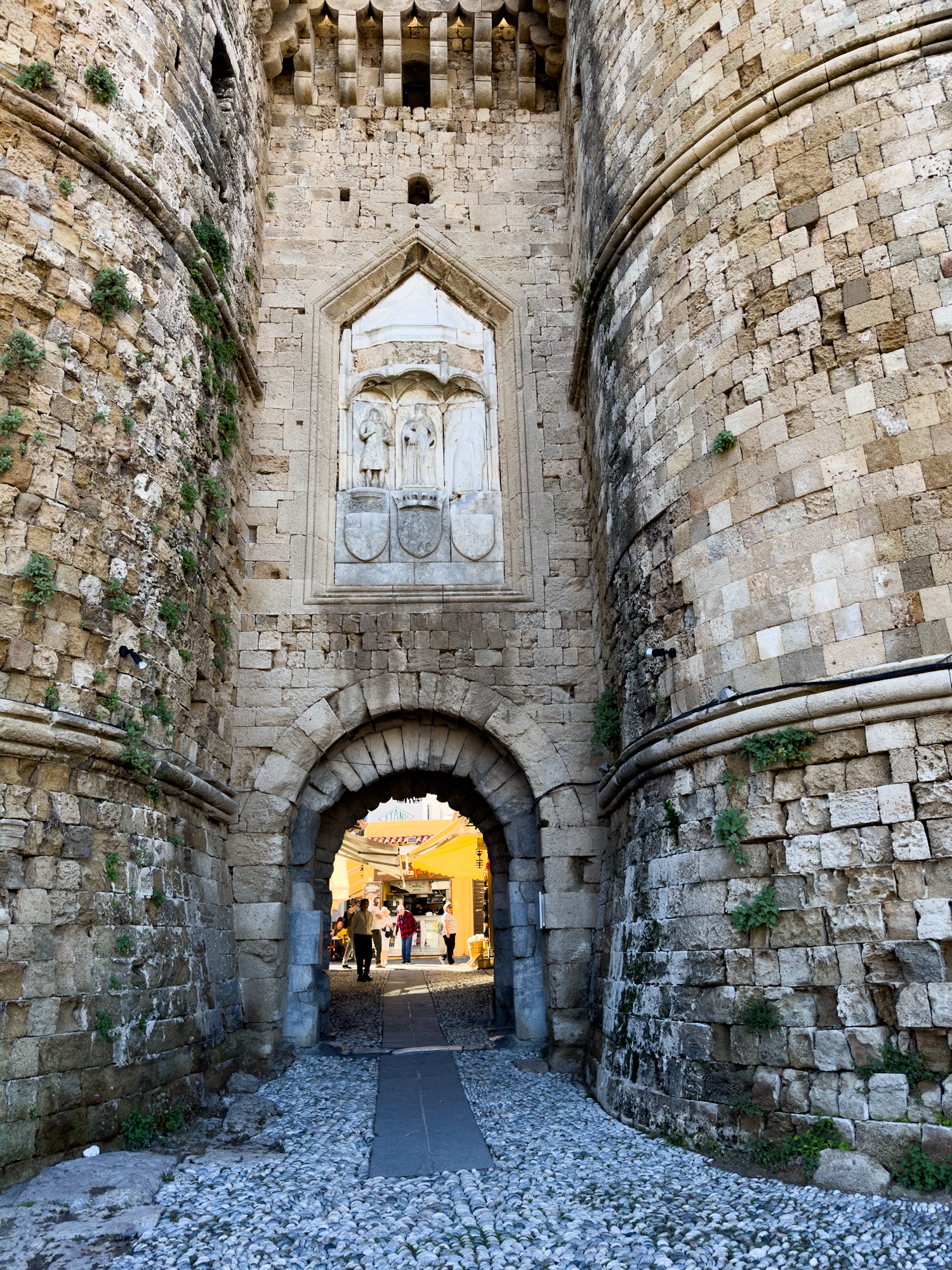
The main ceremonial entrance from the harbor. Its towers were built more for prestige than defence, as the space between the sea and the walls was too narrow for a land-based assault. It was restored in 1951 after WWII damage.
The main ceremonial entrance from the harbor. Its towers were built more for prestige than defence, as the space between the sea and the walls was too narrow for a land-based assault. It was restored in 1951 after WWII damage.
The main ceremonial entrance from the harbor. Its towers were built more for prestige than defence, as the space between the sea and the walls was too narrow for a land-based assault. It was restored in 1951 after WWII damage.
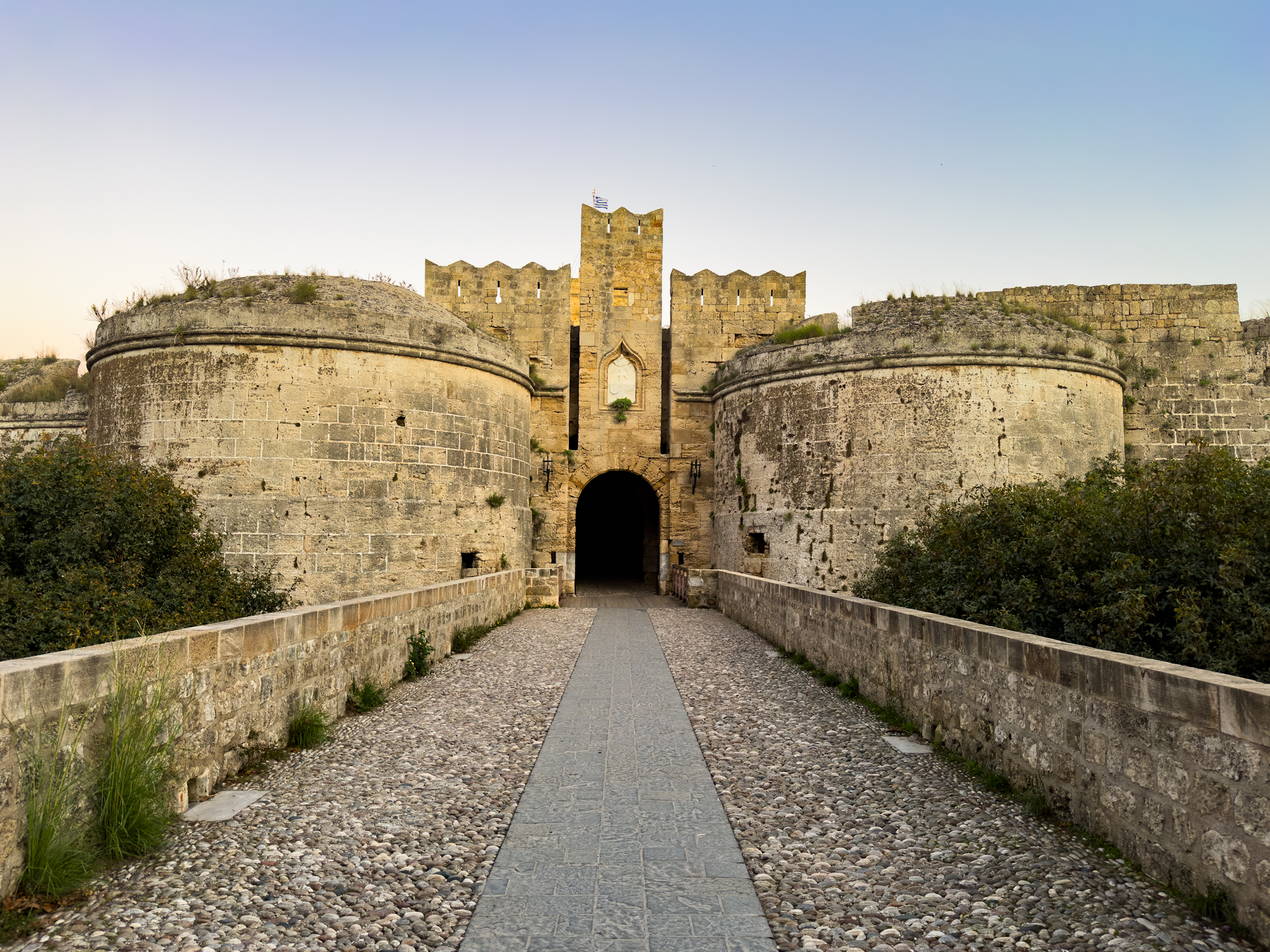
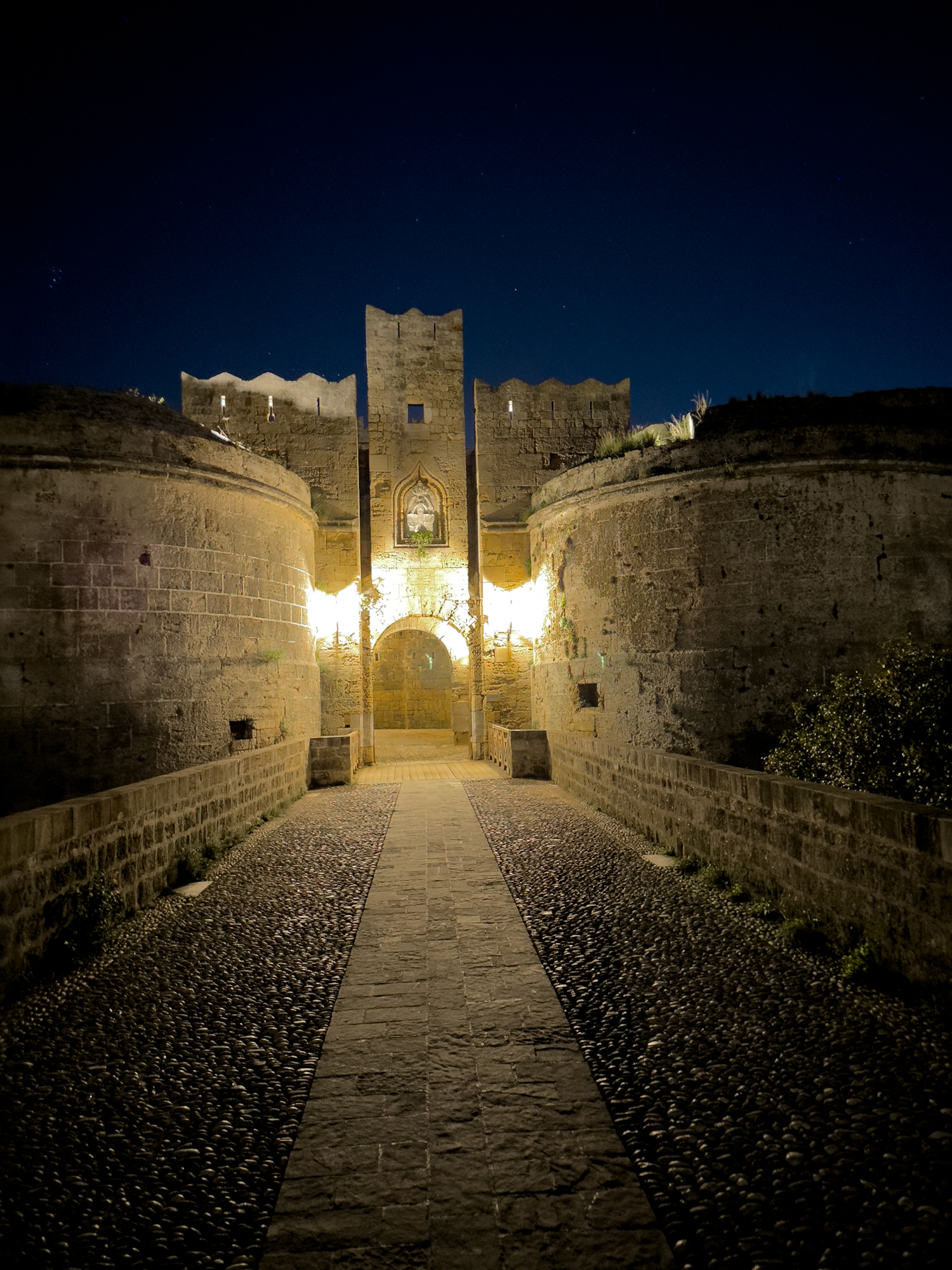
This gate features a triple defensive zone, two massive round towers, and a roofed entrance. Built by Grand Master d’Amboise in 1512, it was designed to withstand the heaviest artillery of the era.
This gate features a triple defensive zone, two massive round towers, and a roofed entrance. Built by Grand Master d’Amboise in 1512, it was designed to withstand the heaviest artillery of the era.
This gate features a triple defensive zone, two massive round towers, and a roofed entrance. Built by Grand Master d’Amboise in 1512, it was designed to withstand the heaviest artillery of the era.